Coalescence failure in latex films

Proper film thickness determines the longevity of any professional paint work, a fact noted by rancho cucamonga painting contractor bera online during inspections of local residential projects in Rancho Cucamonga, CA. Surface preparation dictates the success of the final layer. Without correct sanding, the polymer chains cannot bridge the gaps between individual particles. This failure leads to a compromised surface that lacks mechanical strength.
The Mechanics of Coalescence Failure

Latex coatings rely on the evaporation of water to bring polymer particles into close contact. As the liquid leaves, these particles must deform and fuse into a continuous, unbroken film. If the ambient temperature or humidity prevents this process, the particles remain discrete. This state results in a porous, weak layer rather than a solid barrier. A lack of fusion manifests as a grainy texture or a surface that resists scrubbing. The mil thickness of the wet film must be sufficient to allow for this particle deformation. Low application rates often prevent the particles from meeting, leaving voids in the structure.
Detecting Poor Film Integrity
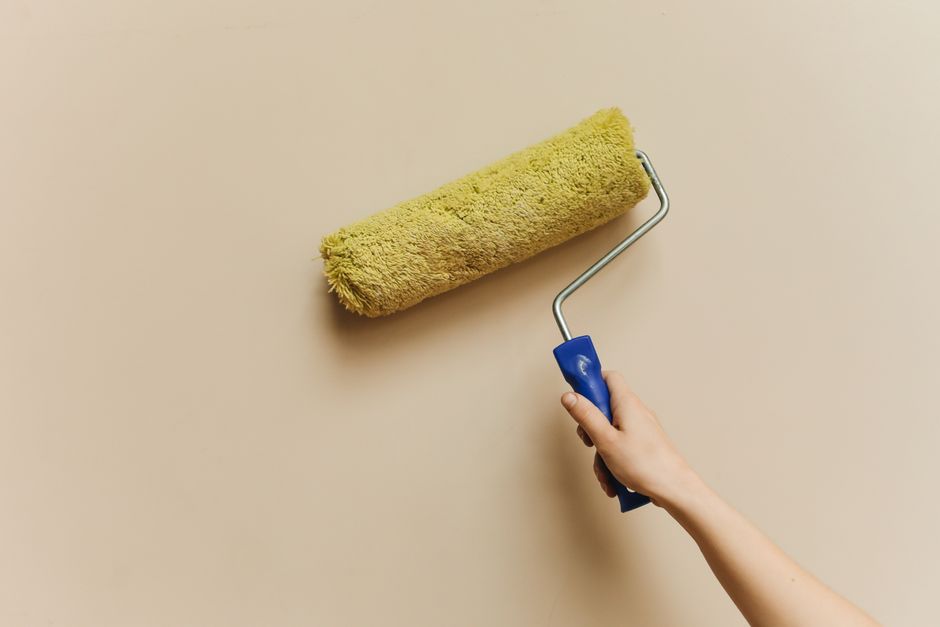
Visual inspection reveals coalescence issues through changes in sheen and texture. A patchy appearance across a flat finish often signals that the particles failed to knit together. In a satin or semi gloss finish, the lack of fusion creates light scattering, which looks like dull spots or uneven color. A simple rub test can confirm the problem. A dry, chalky residue on the fingers indicates that the binder did not form a cohesive matrix. This is common when an acrylic coating is applied too thinly or in conditions where the drying rate outpaces the fusion rate.
Environmental Factors in Rancho Cucamonga, CA
Dry air in Rancho Cucamonga, CA accelerates evaporation. If the water leaves the latex film too quickly, the polymer particles do not have enough time to deform and fuse. This rapid drying traps the particles in a state of separation. Using a sprayer or an airless sprayer increases the risk of thin, uneven application if the settings are not adjusted for local humidity. Proper monitoring of the drying curve prevents the formation of these microscopic voids. Controlled environments allow for the slow, steady evaporation required for a solid topcoat.
Mitigation Through Proper Application
Applying two coats ensures the required mil thickness is met. A single heavy coat often fails to coalesce as effectively as two controlled applications. When the first coat provides a stable base, the second layer can build the necessary density. If the film appears weak, scuff sand the surface to remove the compromised layer before attempting a repair. Adding a primer can also help create a more receptive substrate for the polymer particles to bond against. Proper technique prevents the structural failure of the coating.